

Another day passes and it still doesn’t seem like we have a full read on the Detroit Red Wings.
Are they a plucky bubble team? An abysmal mess? Somewhere in the middle? There are nights where it looks like the Wings can hang with the best of them, and nights where they can barely stay afloat. The latter has been far more regular as of late. The team has let in 22 goals in their last five games, two of which were ugly 6-goal blowouts. They sport a putrid -12 goal differential with the sixth-worst in the league.
Is this due to bad shooting luck? Or is there something worse in the works?
I chose to investigate.
Why it’s just bad luck
All of the advanced stats and nerds of hockey agree that the Red Wings have unsustainably bad puck luck. According to 313 Hockey adversary JFresh, the Wings should be scoring at a 104-point pace:
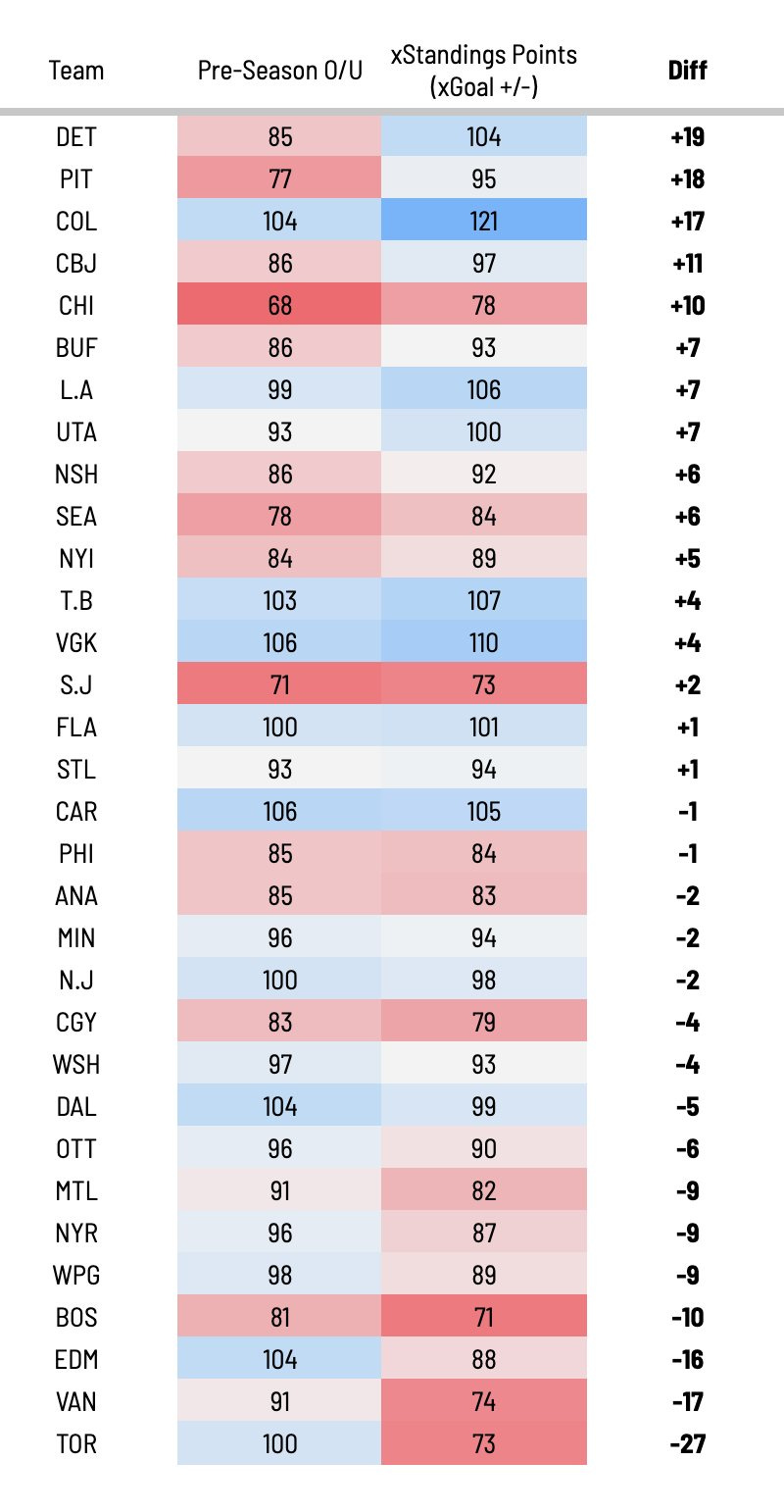
For the people that don’t know or care about advanced stats, this means that the Red Wings are taking shots at high-danger areas (places where you’re most likely to score) on a frequent basis. The problem is, they’re just not going in. Goalies against Detroit seem to become prime Dominik Hasek, robbing shots that, by any other metric, should’ve gone in.
In simpler terms, they’re shooting good but not scoring good.
Take a look at this Goal vs. Expected Goal graph from SportLogiq:
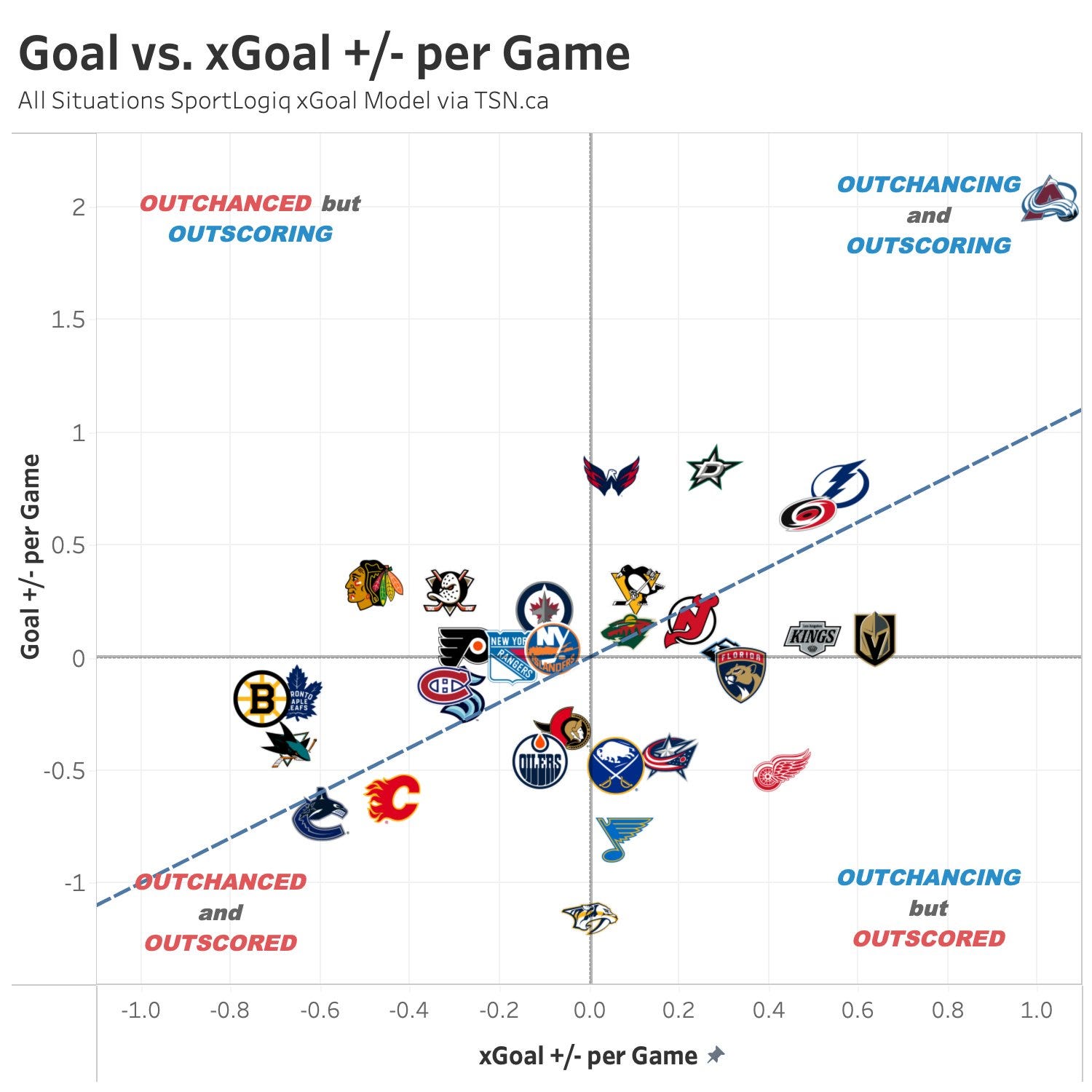
The Wings are getting better chances than nearly every team in the league, but they’re getting consistently outscored. This could be attributed to poor goaltending and abysmal defense. But the lack of scoring paints a clearer picture. The Wings, by all accounts, are snakebitten.
In the words of every old guy who hates analytics, though, hockey is not played on a spreadsheet. You can’t win games on what-ifs and numbers. Still, this indicates that something’s gotta give. Sooner or later, these almost-goals will become true goals.
But will that be enough? And - more importantly - what if they don’t become true goals?
Why it might be bad vibes
There’s something wrong in Hockeytown. The team seems completely, utterly incapable of holding a lead. When they’re down a goal, they grow unconfident and anxious. Ken Kal called it “the yips”. When the team is down, they’re nervous with the puck. They’ll pass it too hard (or too much) and the shots they do fire on the net often wind up directly in the opposing netminder’s pads.
That’s just on the offensive end, as well. On the defense, things look worse than ever. A defenseman giving up the chase and letting in a two-on-one or breakaway is almost inevitable every time the team takes to the ice. Travis Hamonic, very clearly, isn’t the answer.
But neither is Jacob Bernard-Docker.
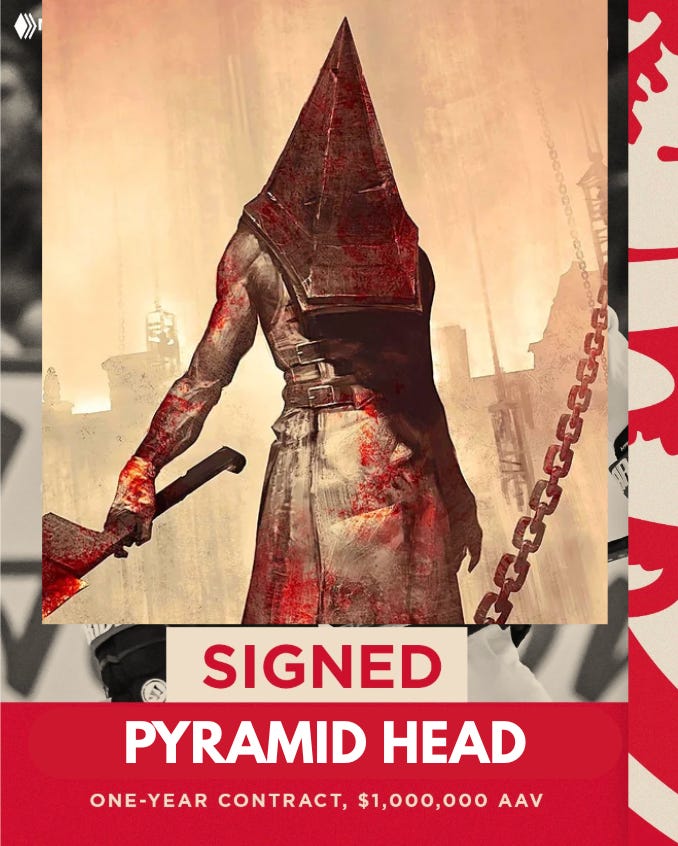
Detroit’s bottom pairing is kind of like Silent Hill. Everyone’s lost out there. Every play is scary. Pyramid Head is there. It’s positively nightmarish, and, by all accounts, head coach Todd McLellan doesn’t have a solution.
Rookie Axel Sandin-Pellikka can only do so much on his pairing, especially when he’s out of coverage to make up for Ben Chiarot’s lapses.
This year was supposed to be the year the defense took a major step. As of right now, the only defensemen that look close to competent are Mo Seider (who is playing Norris-caliber defense) and Simon Edvinsson (who has looked, at his worst, slightly above average).
The elephant in the room
I want you to take a look at John Gibson’s goals against and tell me if you notice anything in particular:
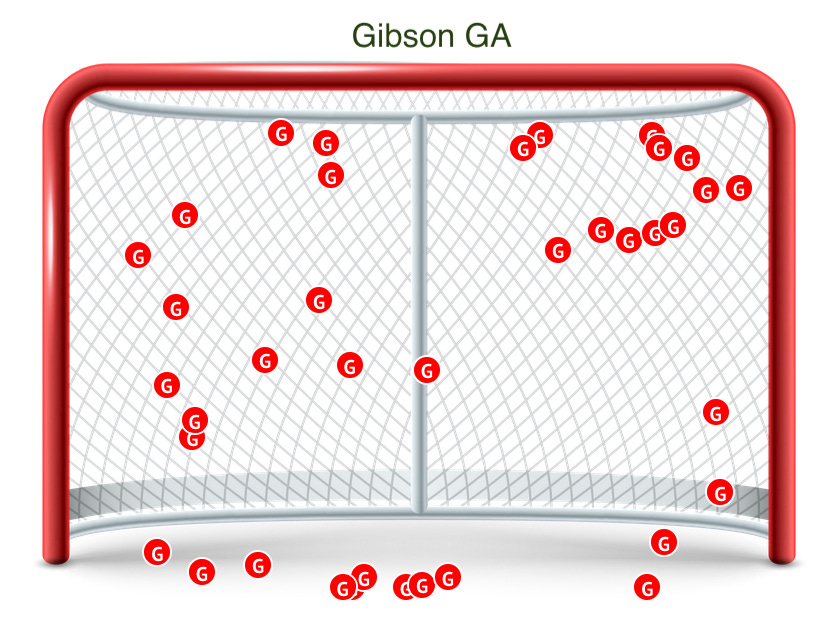
There’s a glove side-sized elephant in the room that’s growing bigger by the minute. While Gibson’s sub-800 save percentage is bad enough, the trend of glove side goals is getting worse by the minute. When it comes to goaltending, your glove side is your bread and butter. You have the most flexibility to make saves and a substantially higher chance to block a shot. If your goaltender can’t stop a glove side save, you’ve got a problem.
To make matters worse, Cam Talbot hasn’t looked much better, sporting a .888 save percentage. What could the Red Wings do if they had a league-average goaltender? They’d certainly stand a better chance of winning, but it’s hard to determine whether or not that would make much of a difference.
Sebastian Cossa has looked outstanding this season. Last week, he won AHL Player of the Week with a .945 save percentage. Unfortunately, the proverbial light at the end of the tunnel is still a little ways away. As nice as it would be to give Cossa NHL minutes, the Grand Rapids Griffins don’t have much in terms of a backup plan. Michal Postava is still injured. Carter Gylander is in the ECHL. Dustin Tokarski is 800 years old. A contingency plan would need to be in place if Cossa makes his way up.
If he does - and if he succeeds - who would be the odd man out? In terms of pure dollar value, Talbot seems like the likelier candidate. After all, Gibson just signed a two-year contract extension at $6.4M per season. It’d be much harder to move his deal than Talbot’s one-year, $2.5M contract. But would the Wings move on from Talbot? And who would be a likely trade candidate?
What do we do?
The gritty, exciting team we saw in the early leg of the NHL season is gone. In its place, we’ve got the remnants of the late Jeff Blashill/Derek Lalonde era. Inconsistent defense, shaky-at-best offense, and goaltending that takes the day off at random intervals. To say the team needs a drastic shake-up is an understatement. This is, of course, easier said than done.
Would trading for a new top-four defenseman be a lateral move, or could it be the difference-maker this team needs to make it to the playoffs? This part of the rebuild is the most precarious. Every move from this point on is make-or-break. To trade away (or for) a key player is to risk pushing the window back (or even outright close it). You need to be doubly sure that every move you make is going to put the team in the best place it can to succeed.
Which is why…
Conclusion: Shake it up or shrug it off?
The Wings have tried to play the game of “we’ll get ‘em next time”. They had all the time (and grace) in the world before the Nashville Predators obliterated them a few weeks back. Now, the onus falls on general manager Steve Yzerman to make an assessment about this team. It’s one thing to believe in your core, but to do so little to help them is a fool’s errand.
Yzerman needs to make a major change with this roster. That change could (and should) be for someone big like Quinn Hughes.
Hughes is one of the best defensemen in the NHL. The former University of Michigan product is an outstanding Norris-winning defenseman with two years left on his term at $7.85M a season. In 454 games with the Vancouver Canucks, Hughes has 431 points. To score at a pace that high as a defenseman is nothing short of impressive.
There was a period of time where the Wings could’ve drafted Hughes. Whatever you do, do NOT look up who they drafted instead.
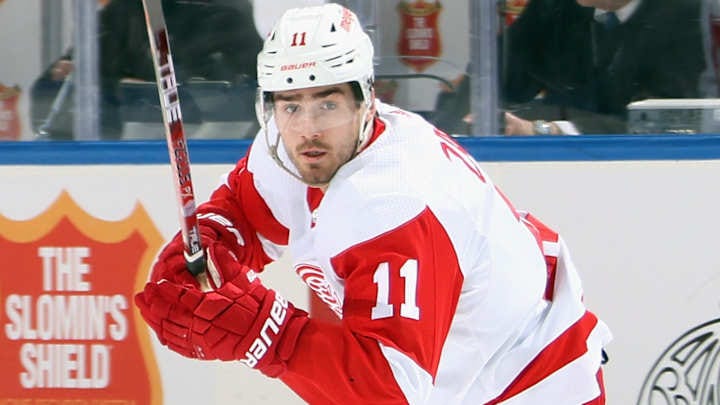
It appears the Canucks are about to enter a long, arduous rebuild. Whether Hughes wants to spend the rest of his prime on a team in dire straits is anyone’s guess. With that said, multiple NHL insiders have linked Hughes to the Red Wings. Of all the would-be suitors for Hughes, the New Jersey Devils and Red Wings appear to be the most likely candidates.
The asking price will be substantially high, though. We’re talking multiple first round picks and players like Nate Danielson, Michael Brandsegg-Nygard, or even Axel Sandin-Pellikka. If that seems like a tall order, it’s because, in return, the Red Wings would acquire a 26-year-old Norris-winning defenseman in the prime of his career. If I’m Steve Yzerman, I’m sending the best offer I possibly can in order to whet the Canucks’ appetite.
There’s a chance, in some nightmarish scenario, where Hughes plays out the rest of his term with Vancouver or Detroit and sings in New Jersey to play with his brothers. Having said that, there’s a chance the other two Hughes brothers join Quinn in Detroit.
Imagine a Red Wings roster with Jack, Luke, and Hughes on it. The sky’s the limit for a team of that caliber.